Rory Sutherland: The Brilliant Mind Changing Advertising Through Behavioral Science
Discover the remarkable career, influential books, creative thinking, and marketing philosophy of one of Britain's most recognized advertising executives.

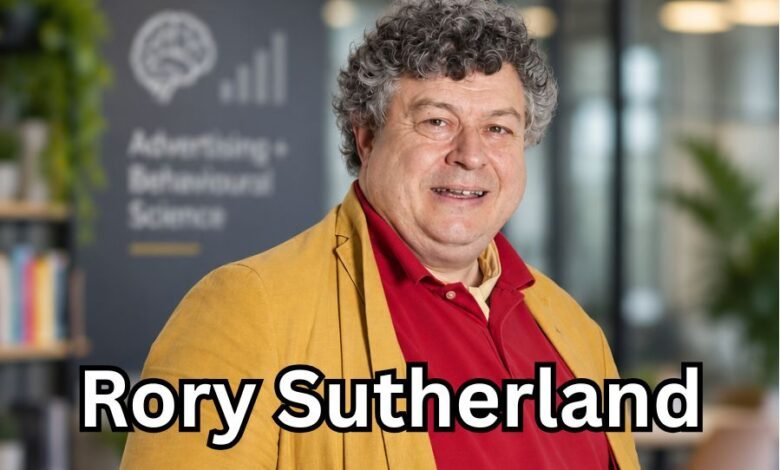
Rory Sutherland is a British advertising executive, author, and influential advocate of behavioral science. Best known for his decades-long association with Ogilvy UK, he has challenged conventional ideas about marketing, consumer psychology, and business decision-making. His approach combines creative advertising with insights into why people behave in seemingly irrational ways.
Born on November 12, 1965, in Wales, Sutherland has become a familiar voice through his books, TED Talks, public appearances, and commentary on consumer behavior. His central argument is simple but powerful: understanding human perception can sometimes solve problems more effectively than expensive technological or operational changes.
This article explores his background, advertising career, bestselling books, behavioral science philosophy, and lasting contribution to modern marketing.
Who Is Rory Sutherland?
Rory Sutherland, whose full name is Roderick Henry Sutherland, is a Welsh-born advertising professional recognized for connecting marketing creativity with behavioral economics.
He is widely known for serving as Vice Chairman of Ogilvy UK and for helping establish the agency’s behavioral science practice. Professional profiles have also identified him as President Emeritus of Ogilvy Consulting.
Unlike marketing executives who focus primarily on advertising budgets, data, or traditional market research, Sutherland examines how emotions, expectations, social influences, and context shape purchasing decisions.
His ideas have attracted interest beyond advertising, including among business leaders, entrepreneurs, economists, and public policy professionals.
Early Life and Academic Background
Growing Up in Wales
Rory Sutherland was born on November 12, 1965, in Monmouthshire, Wales, and grew up in the Usk area.
He attended Monmouth School before continuing his education at Christ’s College, Cambridge, where he studied Classics.
His academic background was not directly connected to advertising. However, studying classical literature, language, and ideas offered a foundation for thinking about communication and persuasion.
Finding a Different Professional Direction
Before establishing himself in advertising, Sutherland briefly worked as a classics teacher.
He eventually entered the advertising industry, beginning a professional journey that would span several decades.
His career demonstrates how creative industries can benefit from people whose educational backgrounds extend beyond conventional business or marketing qualifications.
Rory Sutherland’s Rise Through Ogilvy
Joining the Advertising Industry in 1988
Sutherland joined Ogilvy & Mather as a graduate trainee in 1988.
He initially worked in advertising planning before moving into copywriting in 1990. His ability to combine humor, creativity, and persuasive communication helped establish his professional reputation.
Over the following years, he gained experience developing advertising ideas for established companies and became increasingly involved in creative leadership.
Moving Into Senior Leadership
His progression through Ogilvy included several important responsibilities.
He became a senior creative executive at OgilvyOne during the 1990s and was appointed Vice Chairman of Ogilvy Group UK in 2005.
These positions gave him opportunities to influence advertising strategy while exploring unconventional approaches to consumer behavior.
Rather than treating creativity as decoration added after business decisions, Sutherland increasingly argued that creative thinking should help determine how problems are understood and solved.
Why Rory Sutherland Champions Behavioral Science
One of Sutherland’s most important professional contributions is his work connecting behavioral science with commercial decision-making.
He co-founded Ogilvy’s behavioral science practice, commonly associated with Ogilvy Change.
The practice explores how psychological insights can help organizations identify opportunities that conventional analysis might overlook.
Understanding the Irrational Consumer
Traditional economic models often assume that people make decisions by comparing available information and selecting the most beneficial option.
Real human behavior is more complicated.
People may choose familiar brands, respond to subtle environmental changes, or value convenience over a mathematically cheaper alternative.
Sutherland argues that businesses should understand these psychological influences rather than assume consumers always behave rationally.
Small Changes Can Produce Meaningful Results
A major theme in his work is that relatively inexpensive changes can sometimes create substantial improvements.
Examples of this thinking include:
- Making waiting times feel shorter by providing clear information.
- Improving customer experiences through more thoughtful communication.
- Presenting choices in ways that reduce confusion.
- Using reassuring messages to increase consumer confidence.
- Changing perceptions of value without necessarily changing the underlying product.
These examples illustrate the importance of context, expectation, and presentation in everyday decision-making.
The Power of Perceived Value
Sutherland frequently distinguishes between objective improvements and improvements in how people experience something.
A service doesn’t always need to get faster to feel better. Better information, greater certainty, or a more pleasant experience can change customer satisfaction.
This perspective is especially relevant to marketing, product design, transportation, and customer service.
His Most Influential Books and Publications
Alchemy: The Surprising Power of Ideas That Don’t Make Sense
Published in 2019, Alchemy is Rory Sutherland’s best-known book.
It explores why apparently illogical ideas can produce extraordinary results when they reflect genuine human psychology.
Through business examples, observations, and behavioral insights, Sutherland questions the assumption that logical analysis always produces the best solution.
The book has attracted readers interested in advertising, economics, entrepreneurship, and creative problem-solving.
The Wiki Man
Published in 2011, The Wiki Man brings together Sutherland’s observations and writings on advertising, technology, marketing, and human behavior.
Its conversational and often humorous approach reflects his distinctive communication style.
Transport for Humans
Sutherland co-authored Transport for Humans: Are We Nearly There Yet? with Pete Dyson in 2021.
The book examines transportation through behavioral science, exploring how travelers experience journeys rather than focusing exclusively on engineering or operational efficiency.
It extends his central philosophy into a practical area of everyday life.
Public Speaking, TED Talks, and Industry Recognition
Rory Sutherland has become widely recognized as a public speaker who makes complex behavioral concepts accessible.
His 2009 TED Talk, Life Lessons from an Ad Man, explores how advertising and perception influence the value people attach to products and experiences.
In 2010, he delivered another TED Talk, Sweat the Small Stuff, discussing why modest, imaginative solutions may outperform expensive interventions.
He has also held significant industry responsibilities, including serving as President of the Institute of Practitioners in Advertising.
Beyond speaking engagements, Sutherland has written The Wiki Man column for The Spectator and contributed to discussions about technology, psychology, and marketing.
His influence reflects an ability to communicate serious ideas through memorable examples and entertaining arguments.
What Makes His Marketing Philosophy Different?
Sutherland’s thinking challenges businesses to reconsider how they define problems.
Instead of immediately seeking larger budgets, better technology, or greater efficiency, he encourages organizations to examine human expectations.
Three recurring principles distinguish his approach.
Psychology matters: Purchasing decisions are influenced by emotional and social factors alongside practical considerations.
Creativity creates opportunities: Unconventional ideas can reveal solutions that standard business analysis misses.
Experience shapes value: How customers perceive a product or service may matter as much as its measurable characteristics.
These principles do not suggest that logic or evidence should be abandoned. Rather, they encourage businesses to recognize the limitations of models that overlook human behavior.
Rory Sutherland’s Personal Life
Sutherland generally maintains a distinction between his public professional work and his family life.
Published professional biographies state that he is married to a member of the clergy and has twin daughters.
Although aspects of his family background have appeared in interviews and public profiles, his reputation rests primarily on his advertising career, books, and contributions to behavioral science.
His precise financial circumstances are not established by reliable publicly available financial disclosures.
Frequently Asked Questions About Rory Sutherland
1. How old is Rory Sutherland?
Rory Sutherland was born on November 12, 1965. He turned 61 years old on November 12, 2026.
2. What is Rory Sutherland famous for?
He is best known for his leadership roles at Ogilvy, his advocacy of behavioral science in marketing, and his book Alchemy. His TED Talks have also introduced his ideas to international audiences.
3. What is Rory Sutherland’s most popular book?
His best-known book is Alchemy: The Surprising Power of Ideas That Don’t Make Sense, originally published in 2019. It examines unconventional thinking, consumer psychology, and creative business solutions.
4. What does Rory Sutherland believe about marketing?
He believes successful marketing requires an understanding of human psychology. Rather than relying entirely on rational economic assumptions, he encourages businesses to explore perceptions, emotions, expectations, and behavioral influences.
5. What is Rory Sutherland’s connection to Ogilvy?
Sutherland joined Ogilvy in 1988 and progressed through copywriting and creative leadership positions. He became Vice Chairman of Ogilvy Group UK and helped establish its behavioral science practice. He has also been described as President Emeritus of Ogilvy Consulting.
Conclusion: Rory Sutherland’s Lasting Impact on Modern Marketing
Rory Sutherland has built a distinctive professional legacy by challenging the assumption that every business problem requires a purely logical solution.
From his early copywriting career at Ogilvy to his influential books and public speaking, he has encouraged organizations to pay closer attention to how people actually think, feel, and make decisions.
His work demonstrates that creativity and behavioral science can complement traditional business analysis, opening possibilities that might otherwise remain unexplored.
For marketers, entrepreneurs, and readers interested in human psychology, his career offers a valuable lesson: understanding perception can be just as important as improving the product itself.