Robert Russell: The Remarkable Artist Turning Memory, History, and Everyday Objects Into Powerful Paintings
Discover the American contemporary painter's artistic journey, distinctive creative style, Jewish heritage, exhibitions, and marriage to actress Lisa Edelstein.

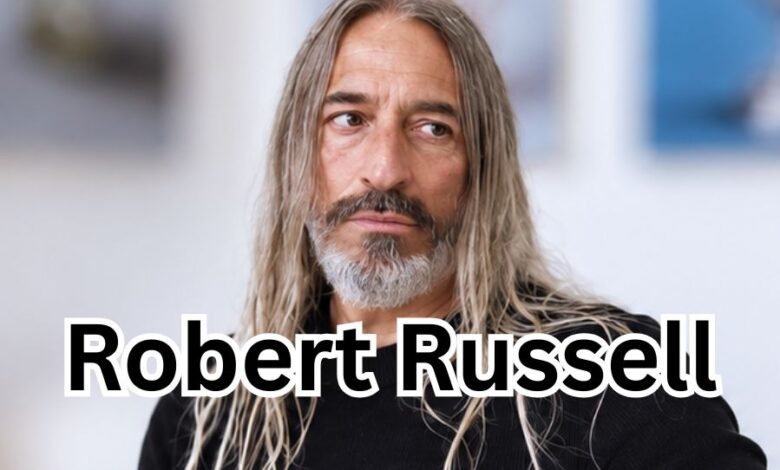
Robert Russell is an American contemporary artist whose paintings explore memory, identity, history, and the emotional significance of ordinary objects. Known for his carefully composed still-life paintings, Russell transforms familiar items such as porcelain cups, books, and candles into thought-provoking works of art.
His creative approach connects traditional painting techniques with contemporary ideas about cultural heritage and personal experience. Beyond his artistic achievements, he is also known as the husband of American actress and artist Lisa Edelstein. Together, they have created artwork that addresses Jewish traditions, family relationships, and the lasting influence of memory.
This article explores Robert Russell’s background, education, artistic techniques, notable exhibitions, relationship with Lisa Edelstein, and contributions to contemporary art.
Quick Bio
| Detail | Information |
|---|---|
| Full Name | Robert Russell |
| Birth Year | 1971 |
| Birthplace | Kansas City, Missouri, USA |
| Nationality | American |
| Profession | Contemporary Artist and Painter |
| Education | Rhode Island School of Design; California Institute of the Arts |
| Known For | Conceptual painting and still-life artwork |
| Spouse | Lisa Edelstein |
| Residence | Los Angeles, California |
| Notable Exhibition | A Palace in Time (2026) |
Who Is Robert Russell?
Robert Russell is a Los Angeles-based conceptual painter born in 1971 in Kansas City, Missouri. His artistic practice focuses on the relationship between visual representation, memory, and the meanings people attach to physical objects.
Unlike artists who primarily depict landscapes or portraits, Russell frequently makes everyday objects the central subjects of his paintings.
His artwork encourages viewers to consider how familiar possessions can preserve personal experiences, religious traditions, and historical associations.
Although his marriage to Lisa Edelstein has attracted public interest, Russell has established an independent professional identity through exhibitions in the United States and internationally.
Education and Development as an Artist
Russell’s professional foundation includes formal training at two respected American art institutions.
He earned his Bachelor of Fine Arts from the Rhode Island School of Design in 1994. He later earned a Master of Fine Arts from the California Institute of the Arts in 2006.
His education helped establish the foundation for a painting practice that combines technical precision with conceptual investigation.
Rather than approaching painting solely as visual decoration, Russell uses recognizable subjects to examine larger questions about representation, history, and cultural meaning.
Over time, these interests developed into distinctive bodies of work involving books, porcelain figurines, religious objects, and domestic possessions.
What Makes Robert Russell’s Paintings Distinctive?
Russell’s paintings frequently depict familiar objects at an unusually large scale. Their carefully controlled surfaces and subtle lighting give them a striking photographic quality.
However, his work’s deeper significance extends beyond technical realism.
Ordinary Objects as Symbols of Memory
A porcelain cup might appear insignificant in everyday life, but Russell’s artistic treatment encourages viewers to reconsider its value.
Through changes in scale, composition, and visual emphasis, an ordinary object can become a symbol of memory, ownership, or cultural inheritance.
His paintings often highlight the relationship between an object’s physical appearance and its associated history.
The Teacups and Book Paintings
Russell’s Book Paintings exhibition was presented at Anat Ebgi in 2019, followed by Teacups in 2021.
His teacup paintings depict decorative porcelain vessels against carefully composed backgrounds.
Their enlarged forms emphasize intricate patterns, reflective surfaces, and ceramics’ fragile qualities.
The works also connect with traditions of still-life painting, particularly artistic reflections on beauty, mortality, and the passage of time.
Porzellan Manufaktur Allach
One of Russell’s historically significant projects is Porzellan Manufaktur Allach, exhibited in 2023.
The paintings examine porcelain figurines associated with the Allach manufacturing operation under Nazi control.
The factory’s history includes the exploitation of concentration camp prisoners as forced laborers.
By representing these seemingly decorative objects, Russell confronts the disturbing historical circumstances behind their production.
Why Historical Context Matters
The project’s significance lies in the contrast between attractive manufactured objects and the suffering connected to their origins.
Russell’s paintings challenge viewers to consider how beauty can conceal troubling histories and why remembering those histories remains necessary.
Jewish Memory and Religious Traditions in His Art
Jewish cultural memory has become an important element of Russell’s artistic practice.
His paintings of ritual objects examine how physical possessions can carry spiritual and emotional importance across generations.
Objects such as Kiddush cups and yahrzeit candles appear in his work.
A Kiddush cup is traditionally associated with blessings over wine or grape juice during Jewish religious observances, while a yahrzeit candle commemorates the anniversary of a person’s death.
Russell’s treatment of these objects emphasizes remembrance, continuity, and the relationship between ordinary materials and sacred traditions.
His 2025 Stateless Objects exhibition continued his exploration of cultural identity, historical displacement, and remembrance.
Robert Russell and Lisa Edelstein’s Marriage
Robert Russell is married to Lisa Edelstein, the American actress widely recognized for portraying Dr. Lisa Cuddy in the television medical drama House.
The couple married in 2014.
While Edelstein established her public career through acting, she has also developed a painting practice exploring family photographs and Jewish domestic life.
Their respective artistic interests share themes of identity, history, and personal experience.
However, they maintain distinct approaches to painting.
Russell generally concentrates on objects and their historical associations, whereas Edelstein frequently creates figurative compositions inspired by family memories.
Their relationship therefore brings together two creative perspectives without making their individual artistic identities interchangeable.
A Palace in Time: Their 2026 Exhibition
An important shared professional milestone was Robert Russell and Lisa Edelstein’s A Palace in Time, presented at the Skirball Cultural Center in Los Angeles from May 20 to September 6, 2026.
The exhibition brought their paintings together around themes of Jewish family life, ritual, celebration, loss, and remembrance.
Its title drew inspiration from Rabbi Abraham Joshua Heschel’s description of the Sabbath as a palace in time.
Two Artistic Perspectives
Russell contributed still-life paintings depicting Jewish ritual objects, including ceremonial cups and memorial candles.
Edelstein presented works inspired by family photographs documenting domestic life in suburban New Jersey during the 1970s.
Displayed together, their paintings created a conversation between personal recollection and the objects through which traditions are preserved.
The exhibition demonstrated how two independent artistic practices could explore connected cultural experiences.
Major Exhibitions and Professional Recognition
Russell has presented his work at galleries and cultural institutions in several locations.
His exhibition record includes Paintings of Men Named Robert Russell at OSMOS in 2013, Book Paintings in 2019, Teacups in 2021, and Falling Teacups at Miles McEnery Gallery in New York in 2024.
He has also exhibited at venues including François Ghebaly in Los Angeles and the Burrard Arts Foundation in Vancouver.
These presentations reflect the development of his artistic interests, from questions of identity and representation to increasingly prominent investigations of cultural memory.
Frequently Asked Questions About Robert Russell
1. Who is Robert Russell?
Robert Russell is an American contemporary painter born in Kansas City in 1971. He is known for conceptual still-life paintings that explore cultural history, memory, mortality, and the meanings attached to everyday objects.
2. Is Robert Russell married to Lisa Edelstein?
Yes. Robert Russell married actress and artist Lisa Edelstein in 2014. Both maintain independent artistic careers and have presented their paintings together in exhibitions.
3. What type of artwork does Robert Russell create?
He creates conceptual paintings, often depicting porcelain objects, books, cups, figurines, and religious items. His work combines realistic visual techniques with historical and symbolic themes.
4. Where did Robert Russell study art?
He earned a Bachelor of Fine Arts from the Rhode Island School of Design in 1994 and a Master of Fine Arts from the California Institute of the Arts in 2006.
5. What is Robert Russell’s most notable recent exhibition?
One significant recent exhibition was A Palace in Time, presented with Lisa Edelstein at the Skirball Cultural Center in Los Angeles in 2026. It explored Jewish memory, religious traditions, and family experiences.
Conclusion
Robert Russell has developed a distinctive position in contemporary painting by revealing the historical and emotional significance of familiar objects. His work connects technical skill with thoughtful investigations of memory, cultural identity, and remembrance.
From his porcelain paintings to his exhibitions exploring Jewish traditions, Russell demonstrates how everyday possessions can communicate meaningful stories. His artistic relationship with Lisa Edelstein adds another dimension to his professional life while allowing both artists to maintain their individual creative identities.
His paintings ultimately encourage audiences to look beyond appearances and consider the histories that ordinary objects may carry.