Full Mouth Dental Implants Cost in 2026: Complete Price Guide, Treatment Options, and Smart Ways to Save
Discover how much a complete set of dental implants costs, what affects the final price, and how to choose a long-lasting tooth replacement solution.

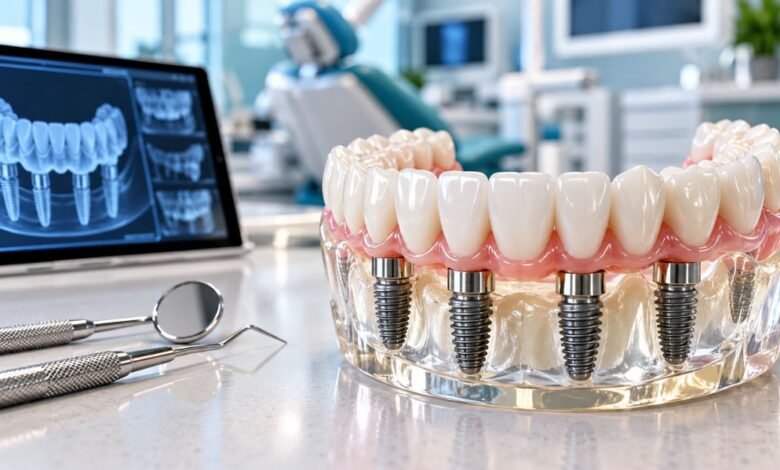
Full Mouth Dental Implants Cost is a top concern for people considering permanent replacements for missing or severely damaged teeth. Dental implants can restore chewing ability, improve smile appearance, and provide greater stability than traditional removable dentures. However, prices vary considerably depending on the treatment method, number of implants, materials, and dental clinic.
In the United States, replacing both arches with fixed, implant-supported teeth can cost about $30,000 to $60,000, and sometimes more. Understanding the expenses before beginning treatment can help patients avoid unexpected charges and make informed decisions about their oral health.
This article explains full-mouth implant prices, All-on-4 and All-on-6 options, additional treatment costs, insurance coverage, recovery, and practical ways to manage expenses.
How Much Do Full-Mouth Dental Implants Cost in 2026?
The total price depends on whether a patient needs implants in one jaw or both. A single arch refers to either the upper or lower set of teeth, while a complete full-mouth restoration generally involves both arches.
The following approximate US price ranges provide a starting point for comparing treatment options.
Treatment Option Estimated Cost Per Arch
Implant-supported removable dentures $7,000–$14,000
All-on-4 fixed dental implants $15,000–$30,000
All-on-6 fixed dental implants $20,000–$40,000
Both arches with fixed implants $30,000–$80,000+ total
These figures are broad planning estimates, not guaranteed national averages. Additional procedures, premium restorations, and complex surgery can increase the final bill.
Importantly, full-mouth treatment does not require replacing every missing tooth with an individual implant. Several strategically positioned implants can support an entire arch of artificial teeth.
Understanding Different Full-Mouth Implant Options
Patients have several restoration options, each with different advantages and costs.
All-on-4 Dental Implants
All-on-4 treatment uses four implants to support a fixed full-arch restoration. It is commonly considered for patients who have lost most or all teeth in one jaw.
The approach can reduce the number of implants required compared with replacing teeth individually. Some suitable patients can receive temporary fixed teeth on the day of surgery, although permanent restorations usually require additional healing time.
All-on-6 Dental Implants
All-on-6 uses six implants to support a complete arch of replacement teeth.
The additional implants may provide more support in certain clinical situations. However, six implants are not automatically better than four for every patient.
A dentist must assess bone availability, bite forces, and the proposed restoration before selecting the appropriate configuration.
Implant-Supported Dentures
Implant-supported dentures attach to dental implants rather than relying entirely on the gums.
Some designs can be removed for cleaning, unlike fixed implant bridges.
Removable implant dentures are often more affordable than fixed full-arch restorations and can offer better stability than conventional dentures.
What Factors Influence Full-Mouth Dental Implant Costs?
Several clinical and practical factors determine the amount a patient ultimately pays.
Number of Implants Required
More implants generally require more components, surgical work, and planning.
However, the final cost also depends on the restoration design. The most expensive treatment is not necessarily the most appropriate.
Jawbone Condition
Dental implants require sufficient healthy bone to support them.
Patients who have experienced substantial jawbone loss may need bone grafting or other preparatory procedures before implant placement.
These treatments can increase both costs and treatment duration.
Restoration Materials
The artificial teeth attached to implants may be manufactured using acrylic-based materials, zirconia, or other dental materials.
Acrylic restorations can cost less initially and may be easier to repair.
Zirconia restorations may offer excellent strength and wear resistance but can cost more to manufacture.
Dentist’s Experience and Clinic Location
Fees vary by location, clinician qualifications, laboratory arrangements, and procedure complexity.
A highly experienced implant team may charge more, but patients should evaluate training, treatment planning, clinical standards, and follow-up care rather than choosing solely by price.
Additional Expenses That Patients Should Understand
An advertised dental implant price may not reflect the full cost of treatment.
Potential additional charges include:
- Initial dental consultation and examination.
- Digital X-rays or three-dimensional CBCT scans.
- Tooth extractions and periodontal treatment.
- Bone grafting or sinus augmentation.
- Sedation or additional anesthesia.
- Temporary teeth during healing.
- Final restoration adjustments and maintenance.
Why a Written Treatment Estimate Matters
Patients should request an itemized quote that describes every stage of the procedure.
Temporary Teeth Versus Permanent Teeth
Some clinics advertise same-day teeth, but the restoration fitted immediately after surgery may be temporary.
The definitive bridge is often manufactured and installed after the implants have integrated with the jawbone.
Confirming whether both restorations are included can prevent expensive misunderstandings.
Does Dental Insurance Cover Full-Mouth Implants?
Dental insurance coverage varies considerably.
Some policies provide partial benefits for implant surgery, restorations, or related dental procedures. Others exclude implants or apply annual benefit limits, leaving substantial out-of-pocket expenses.
Patients should request a written pre-treatment estimate from their insurer and confirm coverage separately for implant placement, extractions, grafting, and replacement teeth.
Financing arrangements may also be available, but interest charges, repayment terms, and the total amount payable require careful consideration.
How Long Does Full-Mouth Implant Treatment Take?
Treatment generally begins with an oral examination, diagnostic imaging, and a personalized restoration plan.
Depending on the patient’s condition, the dentist may perform necessary tooth extractions or bone grafting before or during implant surgery.
After placement, the implants gradually integrate with the surrounding bone through osseointegration.
This healing phase commonly takes several months. Some patients receive temporary teeth earlier, while others must wait before their implants can safely support a restoration.
Once healing is satisfactory, the dentist fits and adjusts the final artificial teeth.
Are Full-Mouth Dental Implants Worth the Investment?
Implant-supported restorations can offer meaningful benefits, particularly for patients struggling with loose dentures or extensive tooth loss.
Potential advantages include improved chewing stability, more comfortable speech, enhanced appearance, and support for preserving jawbone around the implants.
Nevertheless, implants involve surgery and require ongoing maintenance.
Complications can include infection, implant failure, inflammation around the implants, or mechanical damage to the restoration.
Regular professional examinations, daily cleaning, and appropriate management of risk factors such as smoking and uncontrolled diabetes are essential.
The most suitable option depends on oral health, personal expectations, treatment suitability, and affordability.
Practical Ways to Reduce Dental Implant Expenses
Patients can manage treatment costs without compromising essential clinical standards.
Obtaining detailed quotations from multiple qualified implant providers is a useful starting point. Comparing equivalent treatment plans is more informative than comparing advertised starting prices.
Dental schools with supervised treatment programs may offer another option.
Patients can also discuss removable implant-supported dentures if fixed restorations exceed their budget.
When clinically appropriate, preserving healthy natural teeth is equally important. Full-mouth extraction should never be considered merely because an implant package appears convenient.
Frequently Asked Questions About Full Mouth Dental Implants Cost
1. What Is the Average Full Mouth Dental Implants Cost Without Insurance?
In the United States, a fixed full-mouth restoration typically costs tens of thousands of dollars. A useful starting range is about $30,000–$60,000 for both arches, though complex or premium treatments can exceed that. A personalized examination is needed for an accurate price.
2. Can You Get Full-Mouth Dental Implants for Less Than $20,000?
Some lower-cost treatment plans, particularly removable implant-supported dentures, may cost less than $20,000 for both arches. Some fixed treatments may also be advertised at lower prices, but patients should confirm what is included and whether additional surgery or final teeth cost extra.
3. How Long Do Full-Mouth Dental Implants Last?
Implant fixtures can work for decades with proper care, but lifetime success isn’t guaranteed. The attached bridge or denture may need repairs or replacement sooner due to wear, damage, or changes in the mouth.
4. Are All-on-4 Implants Cheaper Than All-on-6?
All-on-4 treatment is often less expensive because fewer implants are used. However, the final difference depends on the prosthetic materials, surgical requirements, bone condition, and clinic pricing. The treatment design should be selected according to clinical needs rather than cost alone.
5. Is Getting Full-Mouth Dental Implants Painful?
Implant surgery is normally performed with local anesthesia, sometimes combined with sedation. Patients may experience swelling, tenderness, or discomfort afterward. Recovery varies, and the dental team should explain pain management, healing expectations, and warning signs requiring prompt attention.
Conclusion: Making a Smart Decision About Full Mouth Dental Implants Cost
Understanding Full Mouth Dental Implants Cost requires looking beyond the advertised price. The number of implants, jawbone condition, restoration materials, professional fees, and long-term maintenance all influence the overall investment.
For many patients, implant-supported teeth can significantly improve comfort, confidence, and everyday oral function. However, successful treatment depends on careful clinical planning and realistic expectations.
Before deciding, consult a qualified dental implant professional, compare detailed written estimates, and choose a treatment approach that balances safety, durability, function, and financial practicality.