Harvey Proctor: The Remarkable Life, Political Career and Fight for Justice
Discover the life of the former British Conservative MP, from his years in Parliament to the controversies, personal challenges and legal battles that shaped his public reputation.

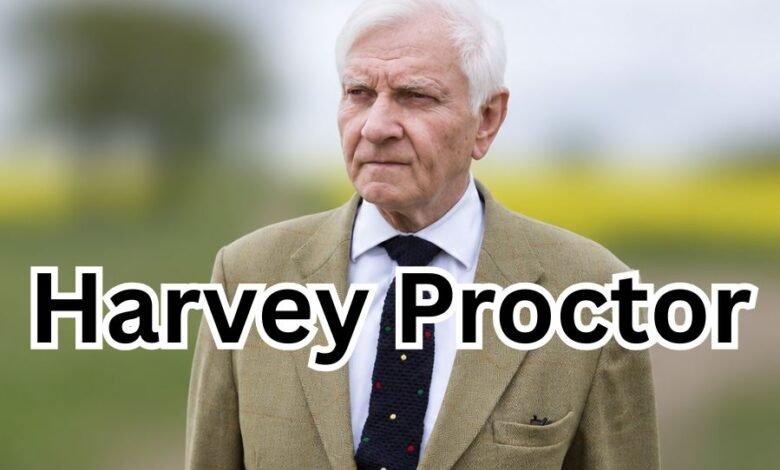
Harvey Proctor is a former British Conservative politician whose life has been marked by political ambition, public controversy and a prolonged struggle to defend his reputation. Serving in the House of Commons between 1979 and 1987, he became known for his outspoken political positions and involvement in Conservative Party affairs.
His parliamentary career ended following a criminal case in 1987, but decades later, he returned to national headlines after being falsely accused of serious crimes during a controversial police investigation. His experience raises important questions about British politics, changing social attitudes, police accountability and the presumption of innocence.
This article examines Harvey Proctor’s early life, political achievements, parliamentary responsibilities, legal controversies and experiences after leaving public office.
Who Is Harvey Proctor?
Keith Harvey Proctor, born on January 16, 1947, in Pontefract, Yorkshire, England, is a former Conservative Member of Parliament. He represented the Essex constituency of Basildon from 1979 to 1983 and Billericay from 1983 to 1987.
Proctor entered national politics during a period of considerable political and economic change in Britain. His parliamentary service coincided with the early years of Margaret Thatcher’s premiership, when debates surrounding immigration, European integration and the direction of the Conservative Party were particularly prominent.
Although his time as an elected representative lasted approximately eight years, his life after Parliament continued to attract attention. He subsequently worked in retail, served as a private secretary and became involved in a widely criticized police investigation.
Early Life, Education and Political Interests
Harvey Proctor grew up in Yorkshire and attended Scarborough High School for Boys before studying history at the University of York—his interest in politics developed at a relatively young age.
He joined the Young Conservatives in 1961, beginning an association with Conservative politics that would influence much of his professional life.
During his university years, he became chairman of the York University Conservative Association, serving from 1967 to 1969. This involvement provided experience in political organization, public debate, and campaigning.
Before becoming an MP, Proctor worked within Conservative political circles and developed connections with individuals associated with the party’s traditionalist wing.
His early involvement with the Conservative Monday Club, a right-wing political organization, became central to his political identity.
Harvey Proctor’s Rise to Parliament
Proctor’s first attempts to enter the House of Commons were unsuccessful. He contested Hackney South and Shoreditch in both general elections held in 1974.
These campaigns nevertheless gave him practical experience in electoral politics and helped establish him as a committed Conservative activist.
His breakthrough came during the 1979 UK general election, when the Conservatives secured victory under Margaret Thatcher.
Proctor won the Basildon constituency in Essex, defeating the sitting Labor MP, Eric Moonman. His election placed him among the Conservative politicians who entered Parliament at the beginning of the Thatcher government.
Following constituency boundary changes, he contested and won Billericay in the 1983 general election.
He represented Billericay until 1987, when his parliamentary career ended.
Political Beliefs and Parliamentary Contributions
During his time in the House of Commons, Proctor was associated with the Conservative Party’s right wing.
He became particularly known for his positions on immigration, national sovereignty, and Britain’s relationship with European institutions.
His political activities included:
- Supporting restrictive immigration policies and repatriation proposals.
- Opposing aspects of Britain’s participation in European institutions.
- Participating in debates concerning Northern Ireland’s constitutional arrangements.
- Supporting the restoration of capital punishment.
- Contributing to the activities and policy discussions of the Conservative Monday Club.
Some of these positions were controversial, particularly his views on immigration and race relations.
Proctor also opposed the proposed British boycott of the 1980 Moscow Olympics, demonstrating that his positions did not always follow every prevailing Conservative argument.
His parliamentary record reflects the political divisions and debates that characterized Britain during the late 1970s and 1980s.
The 1987 Criminal Case and Departure From Politics
Harvey Proctor’s parliamentary career ended amid a scandal concerning sexual activity with younger men.
In May 1987, he pleaded guilty to four charges of gross indecency involving males aged 17 and 19. He received a fine totaling £1,450.
At the time, the age of consent for male homosexual activity in England and Wales was 21, compared with 16 for heterosexual activity.
Proctor later explained that he believed the individuals involved were over the legal age of consent. He also emphasized that the law concerning homosexual activity had changed considerably since the 1980s.
The case attracted extensive media attention and contributed to his decision not to stand in the 1987 general election.
Teresa Gorman subsequently became the Conservative MP for Billericay.
The 1987 convictions were separate from the much later allegations investigated through Operation Midland. The latter investigation ended without charges against Proctor.
A New Direction After Westminster
After leaving Parliament, Proctor tried to build a career outside elected politics.
He opened a shirtmaking business, Proctor’s, in Richmond, London, and later expanded into Knightsbridge.
The business attracted financial support from several Conservative political figures and became associated with high-quality men’s clothing.
Despite this support, the enterprise experienced financial difficulties and eventually went into liquidation in 2000.
Proctor also faced serious personal challenges. In 1992, he was subjected to a homophobic attack at his shop. Conservative MP Neil Hamilton, who intervened during the incident, suffered a broken nose.
In 2003, Proctor began working as private secretary to the Duke of Rutland at Belvoir Castle in Leicestershire, a position he held until 2015.
Operation Midland and the False Allegations
One of the most significant episodes in Harvey Proctor‘s later life began in 2015.
The Metropolitan Police launched Operation Midland to investigate allegations of historical child sexual abuse and murder involving prominent public figures.
Proctor became one of the people Carl Beech accused, who presented himself to investigators under the pseudonym “Nick.”
On March 4, 2015, police searched Proctor’s home on the Belvoir estate.
He firmly denied the allegations and publicly challenged the investigation.
The accusations had serious personal and professional consequences. Proctor left his employment at Belvoir Castle and described the extensive damage to his reputation.
In March 2016, police confirmed that no further action would be taken against him. Operation Midland closed without charges being brought against those investigated.
An independent review led by retired High Court judge Sir Richard Henriques subsequently identified 43 failings in the investigation.
The Metropolitan Police acknowledged serious mistakes, and its commissioner, Sir Bernard Hogan-Howe, apologized to Proctor and others affected.
Carl Beech’s Conviction and the Compensation Settlement
The investigation took another major turn when Carl Beech’s accusations were examined through criminal proceedings.
In July 2019, Beech was sentenced to 18 years in prison after being convicted of offenses connected with his fabricated allegations, including perverting the course of justice.
The trial established that his claims against prominent individuals, including Proctor, were false.
Later in 2019, Proctor settled with the Metropolitan Police.
Reports placed the overall settlement at approximately £900,000, comprising around £500,000 in compensation and nearly £400,000 towards legal costs.
The case became an important example in discussions about investigative standards, evidence assessment and the treatment of people accused of serious offenses.
It also highlighted the need to investigate genuine complaints thoroughly while protecting individuals from unsupported allegations.
His Memoir and Personal Reflections
In March 2016, Harvey Proctor published his memoir, Credible and True: The Political and Personal Memoir of K. Harvey Proctor, through Biteback Publishing.
The book explores his upbringing, political ambitions, time in Parliament, and experiences after leaving elected office.
It also addresses the personal consequences of media scrutiny and Operation Midland.
The memoir offers Proctor’s own interpretation of events that attracted considerable public attention.
For readers interested in British political history, the book provides a personal perspective on the relationship between public reputation, private life and institutional power.
Harvey Proctor’s Public Life and Continuing Relevance
Although Proctor has not returned to the House of Commons, his association with Conservative politics has continued.
The Basildon and Billericay Conservative Association lists him as its president, reflecting his longstanding connection with the constituencies he once represented.
His experiences have also contributed to debates about the responsibilities of police investigators and protecting individuals before criminal charges are established.
His story remains distinctive because it includes separate chapters of political controversy, criminal convictions under historical legislation, and later false accusations that resulted in a major police scandal.
Understanding these events accurately requires distinguishing documented legal outcomes from allegations, political opinions, and personal interpretations.
Frequently Asked Questions About Harvey Proctor
1. Who is Harvey Proctor?
Harvey Proctor is a former British Conservative politician who served as a Member of Parliament from 1979 to 1987. He represented Basildon and later Billericay in Essex. He is also known for his involvement in Operation Midland, a police investigation that closed without charges.
2. How old is Harvey Proctor?
Harvey Proctor was born on January 16, 1947. As of November 2026, he is 79. He was born in Pontefract, Yorkshire, England.
3. Why did Harvey Proctor leave Parliament?
Proctor did not contest the 1987 general election following a criminal case involving charges of gross indecency. He pleaded guilty to four charges and received a financial penalty. The case arose under historical laws governing male homosexual activity.
4. Was Harvey Proctor cleared in Operation Midland?
Yes. The Metropolitan Police ended its investigation without bringing charges. The allegations Carl Beech made were later found to be false, and Beech was imprisoned in 2019 for offenses arising from his fabricated claims.
5. What did Harvey Proctor do after leaving politics?
Following his parliamentary career, Proctor operated a men’s shirtmaking business in London. He later worked as private secretary to the Duke of Rutland at Belvoir Castle. He also published his political and personal memoir in 2016 and has maintained connections with Conservative Party organizations.
Conclusion: Understanding Harvey Proctor’s Complex Legacy
Harvey Proctor’s life illustrates how political careers and personal reputations can be shaped by changing laws, public controversy, and institutional decisions.
From his election to Parliament during the Thatcher era to his eventual departure from Westminster, he experienced both political opportunity and substantial public scrutiny. His later involvement in Operation Midland placed him at the center of a major debate about police conduct and false allegations.
His biography is therefore more than the story of a former Conservative MP. It is also a documented account of political change, legal controversy and the enduring importance of fairness, accountability and accurate reporting.