Complio: The Smart Solution for Healthcare Compliance and Document Management
Discover how Complio simplifies clinical requirements, immunization tracking, document verification, and compliance management for healthcare students and educational institutions.

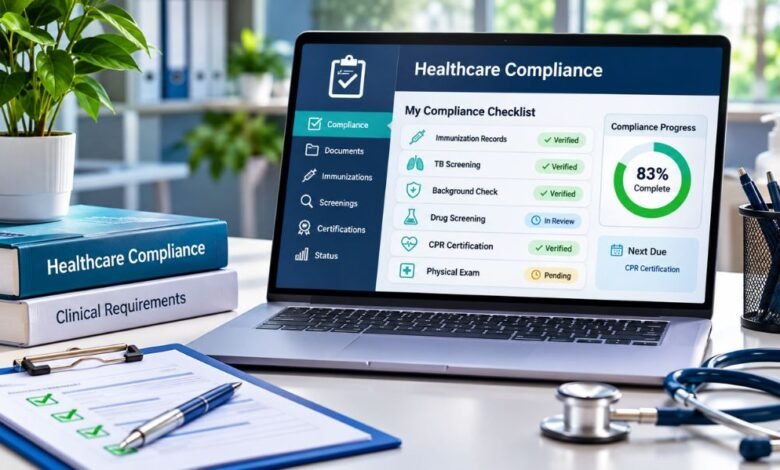
Complio is an online compliance management platform that helps healthcare students, educational institutions, and clinical training programs organize essential documentation and meet key requirements. Managing vaccination records, background checks, certifications, and clinical clearances can become complicated when information is scattered across different systems. Complio brings these responsibilities into a centralized digital environment, making it easier to submit documents, monitor progress, and identify outstanding requirements.
Developed by American DataBank and offered through DISA Healthcare, the platform supports institutions that need reliable processes for preparing students for clinical placements. Understanding how Complio works can help users avoid administrative delays and keep compliance records accurate.
This article explains Complio’s main features, account setup, document tracking, benefits, common challenges, and practical ways to manage healthcare compliance requirements efficiently.
What Is Complio and Why Is It Used?
Complio is a web-based compliance tracking system associated with American DataBank, a DISA Healthcare company. It is widely used by nursing schools, allied health programs, medical education institutions, and organizations that require students to complete specific clinical clearance requirements.
Before participating in clinical placements, healthcare students often need to show they meet their institution’s health, safety, and administrative standards.
These requirements may include immunization documentation, tuberculosis screening, background checks, drug screening, and professional certifications.
Instead of submitting records through several disconnected processes, students can use Complio to organize required information and monitor their compliance status.
The platform does not independently determine every institutional requirement. Each school or program establishes the standards students must meet.
How Complio Makes Compliance Management Easier
One of the platform’s most useful features is its ability to organize several administrative responsibilities in one system.
Centralized Document Storage
Students can upload supporting documentation and access submitted records through their accounts. This reduces dependence on paper files and makes it easier to review previously submitted information.
Compliance Status Monitoring
Complio lets users identify requirements that are completed, outstanding, or need additional attention. This helps students understand what they must do before beginning clinical training.
Expiration Tracking
Some healthcare requirements must be renewed periodically. The platform supports monitoring expiration dates so users can prepare updated documentation before existing records become outdated.
Verification and Administrative Review
Uploaded information may undergo verification according to the institution’s rules. Administrators can use compliance records to help determine whether students have satisfied placement requirements.
How to Create a Complio Account
Setting up an account is generally straightforward, although the exact process depends on the educational institution.
Students should begin by reviewing the registration instructions provided by their school or healthcare program.
The usual process involves selecting the appropriate institutional registration portal, creating or accessing an account, confirming personal details, and choosing the required compliance package.
Some institutions use dedicated registration websites or single sign-on arrangements.
After registration, users can review their compliance checklist and start submitting required documents.
Certain packages may require payment before students can access the associated services.
Selecting the correct institution and academic program is essential because choosing an incorrect package can create administrative complications.
Understanding the Complio Document Upload Process
Submitting accurate information is one of the most important responsibilities for students using the platform.
Users generally begin by opening their compliance checklist and selecting the requirement they want to complete.
Users then upload or enter relevant documentation as instructed.
Common examples include:
- Immunization records and laboratory results
- Tuberculosis screening documentation
- Background screening information
- Drug screening requirements
- CPR or Basic Life Support certification
- Physical examination forms
- Institutional acknowledgments and training certificates
Requirements differ by institution and program, so not every student will need every document.
After submission, students should review their account regularly to confirm that the relevant requirement has been accepted.
Uploading a document does not necessarily mean the requirement has been approved. Verification may still be necessary.
Why Healthcare Students Benefit From Complio
Healthcare education combines academic learning with practical responsibilities. Students may be required to demonstrate readiness before working in hospitals, clinics, or other supervised environments.
Complio helps make those expectations easier to manage.
For students, the primary benefit is improved visibility. Instead of wondering which documents have been submitted or accepted, they can review their compliance information in one location.
The system can also make record maintenance more convenient when new immunizations, updated certifications, or additional documents become necessary.
For institutions, centralized compliance management helps administrative teams track documentation and identify students with incomplete requirements.
This structured approach supports better preparation for clinical rotations and reduces unnecessary confusion between students and program administrators.
Complio Login and Account Access
Students searching for a Complio login should use the access instructions supplied by their institution or the official DISA Complio service.
Some colleges provide dedicated compliance portals, while others direct students to a common login system.
Users should enter their account credentials only through a verified website.
If access becomes difficult, reviewing the institution’s technical instructions is a sensible first step.
Password recovery, account activation, and institutional authentication procedures may differ.
Students experiencing persistent difficulties should contact the platform’s support team or their school’s compliance coordinator.
Keeping account details current also helps ensure that important notifications reach the correct email address.
Common Complio Problems and Practical Solutions
Although digital compliance management is convenient, users can occasionally encounter problems.
Documents Remaining Under Review
A submitted record may require administrative verification before its status changes. Students should check whether additional information is requested and allow time for review.
Incorrect or Incomplete Documentation
Documents may not satisfy requirements when essential information is missing, unclear, or inconsistent with institutional instructions.
Reviewing the relevant checklist before resubmitting can prevent repeated errors.
Expired Certifications
CPR certifications, health screenings, and certain other records may have expiration dates.
Students should arrange renewals before deadlines rather than waiting until clinical placement is approaching.
Trouble Accessing an Account
Login difficulties may result from incorrect credentials, account setup problems, or an institution-specific authentication process.
Official support channels are the safest option when standard recovery steps are unsuccessful.
How Much Does Complio Cost?
Complio pricing is not necessarily the same for every student or institution.
Costs can depend on the educational program, subscription arrangement, background screening package, drug testing services, and additional requirements.
Some schools include particular services within program expenses, while others require students to purchase their own packages.
Before paying, students should carefully review the package their institution requires.
They should also check applicable payment conditions, because certain screening orders may not be refundable after submission.
The most reliable pricing information is the amount displayed through the institution’s approved registration process.
Is Complio Safe for Sensitive Documents?
Complio handles information that can include medical documentation, personal identification details, and screening records.
Because these materials are sensitive, users should follow appropriate digital security practices.
Students should use official login portals, protect their passwords, avoid sharing account access, and sign out when using shared computers.
They should also verify the destination before uploading medical records.
Institutions should assess the platform’s security documentation, contractual protections, access permissions, and applicable privacy obligations when determining whether it meets their requirements.
A compliance management platform can help organize sensitive records, but users and administrators must handle them responsibly.
Frequently Asked Questions About Complio
1. What is Complio mainly used for?
Complio is primarily used to manage healthcare education compliance requirements. Students can submit documentation for immunizations, screenings, certifications, and other institutional requirements for clinical participation.
2. Is Complio mandatory for nursing students?
Complio is mandatory when a nursing school or healthcare program specifically requires students to use it. Other institutions may use different compliance management systems. Students should follow their own program’s official instructions.
3. How long does Complio document approval take?
Approval times can vary depending on the document, verification process, and institution. Some records may require additional review. Students should submit information early and monitor their accounts for updates.
4. Can students update documents after submitting them?
Yes, the platform supports ongoing document maintenance, including updated immunization information and renewed certifications. The exact steps depend on the requirement and the student’s account configuration.
5. What happens if a student does not complete Complio requirements?
Incomplete compliance requirements may prevent a student from beginning or continuing a clinical placement. Depending on institutional policies, this can delay coursework or clinical progression. Students should contact their program coordinator if they anticipate missing a deadline.
Conclusion: Why Complio Matters for Healthcare Education
Complio provides a structured way to manage the documentation required for healthcare education and clinical training. Its centralized approach helps students monitor submissions, understand outstanding requirements, and maintain important records throughout their programs.
The platform also supports educational institutions by organizing compliance information and assisting with administrative verification.
Successful use of Complio depends on accurate documentation, timely submissions, regular account monitoring, and close attention to institutional policies. For healthcare students preparing for clinical placements, these habits can make compliance management considerably easier and help prevent avoidable interruptions.