Spreader Bar: The Ultimate Guide to Safe Lifting, Rigging, and Load Stability
Discover how spreader bars work, their industrial applications, key benefits, and essential safety considerations for heavy lifting operations.

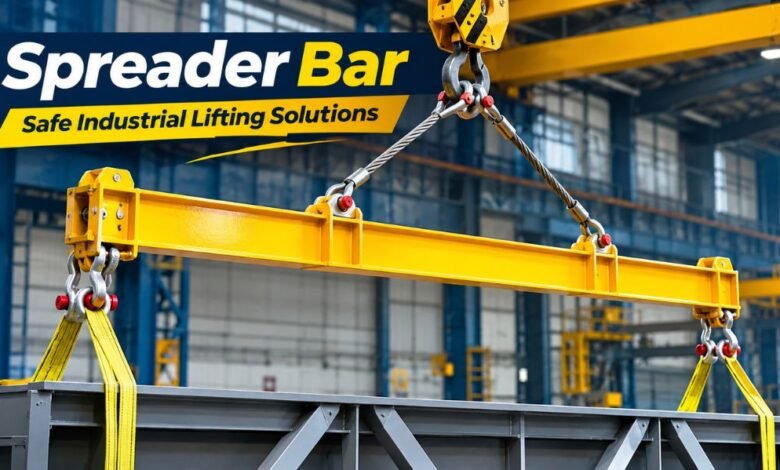
A Spreader Bar is an essential lifting accessory used in construction, manufacturing, shipping, and industrial material handling. Its primary purpose is to keep lifting points separated while helping distribute forces through a properly designed rigging arrangement. This makes it especially useful when handling wide, long, or potentially flexible loads that require support at multiple locations.
Although its design may appear simple, a spreader bar plays a significant role in lifting stability and equipment protection. Understanding how it works, how it differs from a lifting beam, and what safety precautions apply can help businesses plan safer and more efficient lifting operations.
What Is a Spreader Bar?
A spreader bar is a structural lifting device positioned between lifting slings or attachments to maintain a specified distance between lifting points.
Manufacturers commonly make it from structural steel, though materials and construction vary by design.
Unlike a conventional lifting beam, a typical spreader bar primarily carries compressive forces rather than large bending forces.
Its principal functions include:
- Keeping lifting slings separated.
- Supporting wide or elongated loads.
- Helping reduce unwanted inward forces at load attachment points.
- Maintaining suitable lifting geometry.
- Supporting controlled load handling when correctly rigged.
The equipment is commonly used with cranes, hoists, shackles, and rated lifting slings.
How Does a Spreader Bar Work?
A typical spreader bar is suspended beneath a crane hook through two upper sling legs. These slings connect to attachment points near opposite ends of the bar.
Lower slings or other approved attachments connect the bar to the load.
As the crane begins lifting, the load creates tension in the slings. The inclined upper sling legs produce horizontal forces that are resisted through compression in the bar.
Understanding Load Distribution
The spreader arrangement allows the load to be supported at separated lifting points instead of pulling the attachment points together with steeply inclined lower slings.
This configuration can be useful for objects that must remain adequately supported across their width.
However, a spreader bar does not automatically distribute weight equally. Actual loading depends on the load’s center of gravity, attachment positions, sling geometry, and rigging design.
Why Sling Angles Matter
Sling angles directly influence lifting forces.
When an upper sling becomes more horizontal, the tension required to support the same vertical load increases. This also affects the compressive force acting on the spreader bar.
A suitable rigging arrangement must therefore follow the manufacturer’s approved sling angles, rated capacity, and configuration requirements.
Different Types of Spreader Bars
Industrial applications use several configurations depending on the load and working environment.
Fixed-Length Spreader Bars
Fixed-length models maintain a specific distance between lifting points.
They suit repeated lifting operations with loads that have consistent dimensions and attachment locations.
Their relatively straightforward construction makes them useful for dedicated industrial applications.
Adjustable Spreader Bars
Adjustable designs allow the distance between lifting points to change within specified limits.
Some models use telescoping sections or interchangeable components.
Their flexibility is useful in facilities handling equipment or materials of different dimensions.
Modular Spreader Systems
Modular systems use approved interchangeable sections and end units to create different lengths.
They are often selected for specialized heavy-lifting operations where transportation, assembly, and configuration flexibility matter.
Important Capacity Consideration
A bar’s rated capacity may change with its length, configuration, sling angles, or attachment arrangement. Operators must use the rating applicable to the actual setup rather than assuming every position has the same capacity.
Where Are Spreader Bars Used?
Spreader bars serve important functions across industries that regularly move large or difficult-to-handle objects.
Construction Projects
Construction companies use them to lift structural components, prefabricated sections, and other materials that require multiple support points.
Properly engineered lifting arrangements can help limit unwanted forces on components during positioning.
Shipping and Marine Operations
Marine and port operations use specialized lifting equipment to handle cargo, machinery, and large fabricated assemblies.
Spreader bars may be part of these arrangements, although container spreaders and other purpose-built cargo handling equipment are distinct devices.
Manufacturing Facilities
Factories use spreader bars when moving machinery, steel fabrications, industrial frames, and long components.
They can be particularly valuable when equipment has designated lifting points that must remain properly spaced.
Energy and Infrastructure Projects
Heavy lifting equipment is frequently required for large infrastructure components, including fabricated structures and machinery used in energy installations.
Engineered spreader arrangements can form part of these lifting plans.
Spreader Bar vs. Lifting Beam: Key Differences
Although these terms are sometimes used interchangeably, their structural behavior is different.
FeatureSpreader BarLifting Beam
Primary structural force Compression Bending
Typical upper connections Two inclined sling connections Central lifting connection.
Headroom requirements Generally greater Generally lower
Common advantage Efficient wide-load lifting Lifting where vertical clearance is limited
Structural design Compression member Beam resisting bending
A lifting beam is often more practical where available headroom is restricted.
A spreader bar may offer an efficient arrangement for wide loads when sufficient lifting height is available.
The correct choice depends on engineering calculations, operating conditions, and the load itself.
Major Benefits of Using a Spreader Bar
Improved Lifting Geometry
A spreader bar keeps lifting points separated, helping riggers establish an appropriate sling arrangement.
This matters when load attachment points are widely spaced.
Reduced Inward Loading
With correctly arranged lower slings, a spreader bar can reduce inward horizontal forces acting on lifting points.
This benefits certain structures that could otherwise experience undesirable compression.
Greater Equipment Flexibility
Adjustable and modular systems can accommodate different load dimensions when assembled in approved configurations.
Such versatility can reduce the need for numerous dedicated lifting devices.
Efficient Heavy-Lifting Design
Because a conventional spreader bar primarily works in compression, its design can be structurally efficient for suitable applications.
Actual weight and lifting capacity depend on engineering specifications, not the equipment category alone.
How to Choose the Right Spreader Bar
Choosing lifting equipment requires more than comparing prices or overall dimensions.
Check the Working Load Limit
The working load limit (WLL) is one of the most important specifications.
The combined lifting arrangement must remain within the rated capacity of every applicable component, including the bar, slings, shackles, and crane.
Measure the Required Spacing
The spreader length should match the approved lifting-point arrangement.
Incorrect spacing can produce unfavorable sling angles or additional forces in the load.
Consider Headroom and Center of Gravity
Available overhead clearance affects whether a spreader arrangement is practical.
Also consider the load’s center of gravity to achieve a stable lift.
Evaluate the Operating Environment
Temperature, corrosion, weather, and other environmental conditions can affect equipment suitability.
Manufacturers’ instructions and applicable lifting standards should guide selection.
Essential Spreader Bar Safety Practices
Safe operation begins with proper lift planning and equipment inspection.
Before lifting, operators and riggers should:
- Verify the rated capacity and identification markings.
- Inspect the bar, slings, shackles, and attachment points for visible damage.
- Confirm that the rigging matches an approved configuration.
- Check the load weight, center of gravity, and lifting points.
- Establish an exclusion zone and clear communication procedures.
In the United States, OSHA construction rigging rules require appropriate pre-use inspections and removal of defective rigging equipment from service.
During a lift, personnel must avoid standing beneath suspended loads, prevent shock loading, and follow the approved lifting procedure.
Never modify, weld, or repair spreader bars without appropriate engineering authorization and required verification.
Common Mistakes to Avoid
A common mistake is assuming a bar’s maximum rated capacity applies to every possible rigging configuration.
Other problems include using incompatible shackles, ignoring sling angles, lifting from unapproved attachment points, and operating equipment with damaged or missing identification markings.
Another serious error is treating a spreader bar as a substitute for a complete lifting plan.
The device is only one part of the lifting system. Properly trained personnel, suitable equipment, and an engineered lifting arrangement remain essential.
Frequently Asked Questions About Spreader Bars
1. What is the main purpose of a Spreader Bar?
A spreader bar maintains separation between lifting points and transfers forces through a designed lifting arrangement. It is particularly useful for wide or elongated loads requiring support at multiple locations.
2. Is a spreader bar the same as a lifting beam?
No. A conventional spreader bar primarily works in compression, while a lifting beam typically resists bending. Their connection arrangements and headroom requirements also differ.
3. How much weight can a spreader bar lift?
Its lifting capacity depends on its engineered design, rated working load limit, configuration, and rigging geometry. No universal capacity applies to every spreader bar.
4. Can spreader bars be adjusted?
Yes. Some spreader bars have adjustable or modular designs. Adjustments must follow manufacturer instructions, and the applicable capacity rating must be verified for the selected configuration.
5. How often should a spreader bar be inspected?
Inspection requirements depend on applicable regulations, standards, equipment instructions, and operating conditions. Associated rigging must receive appropriate pre-use inspections, while additional periodic inspections may also be required.
Conclusion
A Spreader Bar is a valuable component of industrial lifting systems, especially when loads require widely separated support points and carefully controlled rigging geometry.
Its effectiveness comes from a relatively simple structural principle: using compression in the bar and tension in the lifting slings to support a load.
However, safe lifting depends on correct equipment selection, verified capacities, suitable attachment points, and competent operation. Businesses that follow approved engineering specifications and established lifting procedures can use spreader bars effectively while reducing avoidable rigging risks.