Ste500: A Powerful Guide to High-Strength Steel, Properties, Uses, and Benefits
Discover the essential characteristics, mechanical performance, industrial applications, and practical considerations of Ste500 steel.

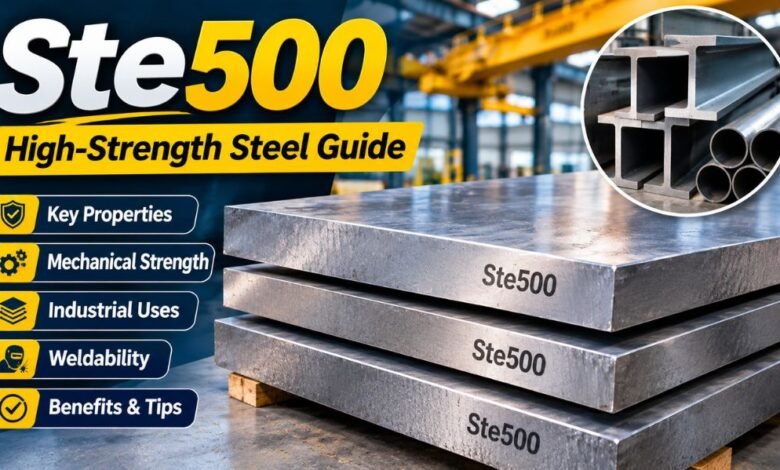
Ste500 is a high-strength steel designation associated with demanding engineering and industrial applications. Commonly written as StE 500, this fine-grain structural steel is recognized for its strength, weldability, and suitability for heavy-duty fabricated components. It has been used in construction, mechanical engineering, pressure equipment, and other applications where reliable material performance matters.
However, understanding its properties requires more than looking at its name. Steel thickness, manufacturing standards, chemical composition, and processing conditions all influence its behavior. Knowing these details helps engineers, manufacturers, and buyers choose materials with confidence.
This article explains Ste500 steel, including its technical characteristics, mechanical properties, applications, manufacturing considerations, advantages, and important purchasing requirements.
What Is Ste500 Steel?
Ste500, conventionally designated StE 500, is a fine-grain, high-strength steel grade associated with older German DIN material standards. Established materials databases identify it by material number 1.8907.
The grade appears in historical specifications such as DIN 17102, which covered weldable fine-grain structural steels. It is particularly relevant to engineering documentation, industrial material records, and projects involving established steel specifications.
The number 500 refers to the nominal strength class, with a minimum yield strength of approximately 500 MPa for certain thickness ranges under relevant specifications.
This does not mean every product supplied under the designation has the same mechanical properties. Thickness and the applicable standard affect the required values.
Understanding the Main Properties of Ste500
Several characteristics distinguish this material from conventional lower-strength structural steels.
High Yield Strength
Yield strength describes the stress at which steel begins undergoing permanent deformation.
For Ste500, published historical specifications identify a minimum yield strength of 500 MPa for certain thinner sections. The specified minimum generally decreases as material thickness increases.
This strength makes the grade relevant to applications requiring significant load-bearing capacity.
Fine-Grain Structure
A fine-grain microstructure contributes to a useful balance between strength and toughness.
Carefully controlled steelmaking, alloying, and heat treatment help achieve the required material characteristics.
Fine-grain steels are particularly valuable when structural components must maintain reliable mechanical performance under demanding loads.
Weldability
Ste500 belongs to a family of steels intended for welded engineering applications.
However, weldability does not mean that any welding method or filler material is automatically suitable.
Welding procedures must consider material thickness, chemical composition, hydrogen control, heat input, and the required mechanical properties of the finished joint.
Toughness and Durability
Toughness describes a material’s ability to absorb energy before fracturing.
Some Ste500 specifications include impact-property requirements relevant to lower-temperature applications.
Actual suitability depends on the specified test temperature, material condition, and certified impact-test results.
Ste500 Chemical Composition
The chemical composition of this grade helps determine its strength, weldability, and manufacturing characteristics.
Typical alloying elements associated with fine-grain structural steels include:
- Carbon: Influences strength, hardness, and welding behavior.
- Manganese: Supports strength development and processing characteristics.
- Silicon: Commonly contributes to deoxidation during steel production.
- Aluminum: Can help control grain structure and bind nitrogen.
- Niobium and vanadium: May be used for grain refinement and strengthening.
- Phosphorus and sulfur: Are controlled because excessive amounts can negatively affect material quality.
The exact permitted concentrations depend on the governing specification.
A manufacturer’s material inspection certificate should be used to verify the chemical composition of any particular steel product.
Mechanical Properties and Technical Specifications
Mechanical properties are among the most important considerations when evaluating Ste500 for engineering work.
PropertyDescription
Material designation StE 500
Material number 1.8907
Steel classification Fine-grain high-strength steel
Historical standard DIN 17102
Nominal yield-strength class 500 MPa
Tensile strength Depends on thickness and specification
Weldability Suitable for qualified welding procedures
Common material condition Normalized or normalized-formed, where specified
The values used in engineering calculations must match the actual product thickness and delivery condition.
For example, a thick steel plate may have a lower specified minimum yield strength than a thinner plate of the same grade.
This distinction is essential for avoiding inappropriate material assumptions.
Where Is Ste500 Commonly Used?
Ste500’s characteristics make it relevant to several industrial sectors.
Structural Engineering
High-strength steel can support demanding structural designs where load-bearing capacity is particularly important.
Historical applications of Ste500 include bridges and support structures.
Engineers must still evaluate fatigue resistance, connections, stability, and the applicable design standards before choosing a material.
Pressure Vessels and Storage Tanks
Ste500 is also used for pressure vessels and stationary or mobile storage tanks.
Such equipment requires careful material selection because pressure, temperature, and operating conditions can significantly affect safety.
The steel must meet the applicable pressure-equipment code and required inspection criteria.
Heavy Industrial Machinery
Industrial structures, fabricated frames, and heavy mechanical components may benefit from materials with relatively high yield strength.
Strength alone is not enough to select a grade. Manufacturers must also consider forming requirements, welded connections, fatigue loading, and manufacturing costs.
Pipelines and Supporting Equipment
Historical material references identify applications involving high-pressure lines and welded engineering systems.
However, a steel grade should never be substituted for a specified pipeline material without verifying the relevant product standard and design requirements.
How Ste500 Differs From Conventional Structural Steel
Conventional structural steel grades are often selected for general construction because they provide a practical combination of availability, strength, and fabrication characteristics.
Ste500 belongs to a higher-strength category.
Its higher nominal yield-strength class can reduce material weight in appropriately designed structures.
Nevertheless, using higher-strength steel does not automatically result in lighter or better construction.
Structural stability, deflection, fatigue performance, connection design, and corrosion protection can limit potential weight reductions.
Higher-strength steel can also require more demanding fabrication controls.
The right material meets the full engineering specification rather than simply offering the highest strength rating.
Manufacturing and Welding Considerations
Processing conditions strongly influence the finished performance of fine-grain steels.
Cutting and Forming
Ste500 components may undergo cutting, machining, bending, and other fabrication operations.
The selected process should account for section thickness, material condition, and the manufacturer’s recommendations.
Excessive deformation or unsuitable thermal processing may affect the finished component’s properties.
Welding Procedures
Qualified welding procedures are especially important for high-strength structural steels.
Fabricators may need to assess preheating, interpass temperature, welding consumables, and cooling rates.
These requirements depend on the material’s chemical composition, thickness, joint design, and service conditions.
Material Inspection
Engineering projects often require material documentation confirming compliance with the purchase specification.
Inspection certificates can provide information about chemical composition, mechanical testing, heat identification, and manufacturing conditions.
Advantages and Limitations of Ste500
One of Ste500’s main advantages is its high-strength classification.
It can be suitable for demanding welded structures when design and manufacturing requirements are met.
Its fine-grain characteristics also make it relevant to applications where strength and toughness must be considered together.
However, the grade has limitations.
Availability may depend on suppliers holding material produced to historical specifications. Modern projects may instead require a grade conforming to a current European standard.
Welding, forming, and inspection requirements may also increase manufacturing complexity.
Cost and supply conditions should therefore be evaluated alongside mechanical performance.
Choosing the Correct Ste500 Material
Purchasing this steel requires careful attention to the specification, not just the grade name.
Before ordering, buyers should verify:
- The exact material designation and governing standard.
- Required thickness, dimensions, and product form.
- Minimum yield strength and tensile-strength requirements.
- Impact-test temperature and toughness requirements.
- Delivery condition, inspection documentation, and welding needs.
Modern European grades may be considered when replacing material originally specified under an older DIN designation.
However, a similar name or strength class does not establish automatic interchangeability.
Any proposed replacement requires comparing the applicable specifications and obtaining engineering approval.
Ste500 FAQs
1. What is Ste500 used for?
Ste500 is associated with high-strength welded structural applications, including industrial equipment, support structures, storage tanks, and pressure-related engineering components. Suitability depends on the applicable material standard and operating conditions.
2. Is Ste500 a high-strength steel?
Yes. StE 500 belongs to a high-strength fine-grain steel category. Its nominal yield-strength class is 500 MPa, although the specified minimum yield strength varies with section thickness.
3. Can Ste500 steel be welded?
Yes, Ste500 is a weldable fine-grain steel. Successful fabrication requires an appropriate welding procedure that accounts for the material’s composition, thickness, and mechanical requirements.
4. Is Ste500 the same as S500N?
Ste500 and S500N appear in historical-to-European steel-grade cross-reference discussions. However, equivalence must be checked against the exact applicable standards, product forms, material numbers, and technical requirements before substitution.
5. What should buyers check before purchasing Ste500?
Buyers should confirm the governing specification, material thickness, delivery condition, mechanical properties, impact-testing requirements, and inspection certificate. These checks help ensure that the supplied steel meets the intended engineering application.
Conclusion
Ste500 remains a relevant steel designation for understanding high-strength fine-grain materials used in demanding engineering applications. Its strength, weldability, and historical use in fabricated industrial structures explain its importance in technical documentation and material selection.
The essential consideration is specification accuracy. Yield strength, toughness, welding requirements, and delivery conditions must be verified for each product. By evaluating these factors carefully, engineers and buyers can determine whether Ste500 or a properly qualified modern alternative fits their project.